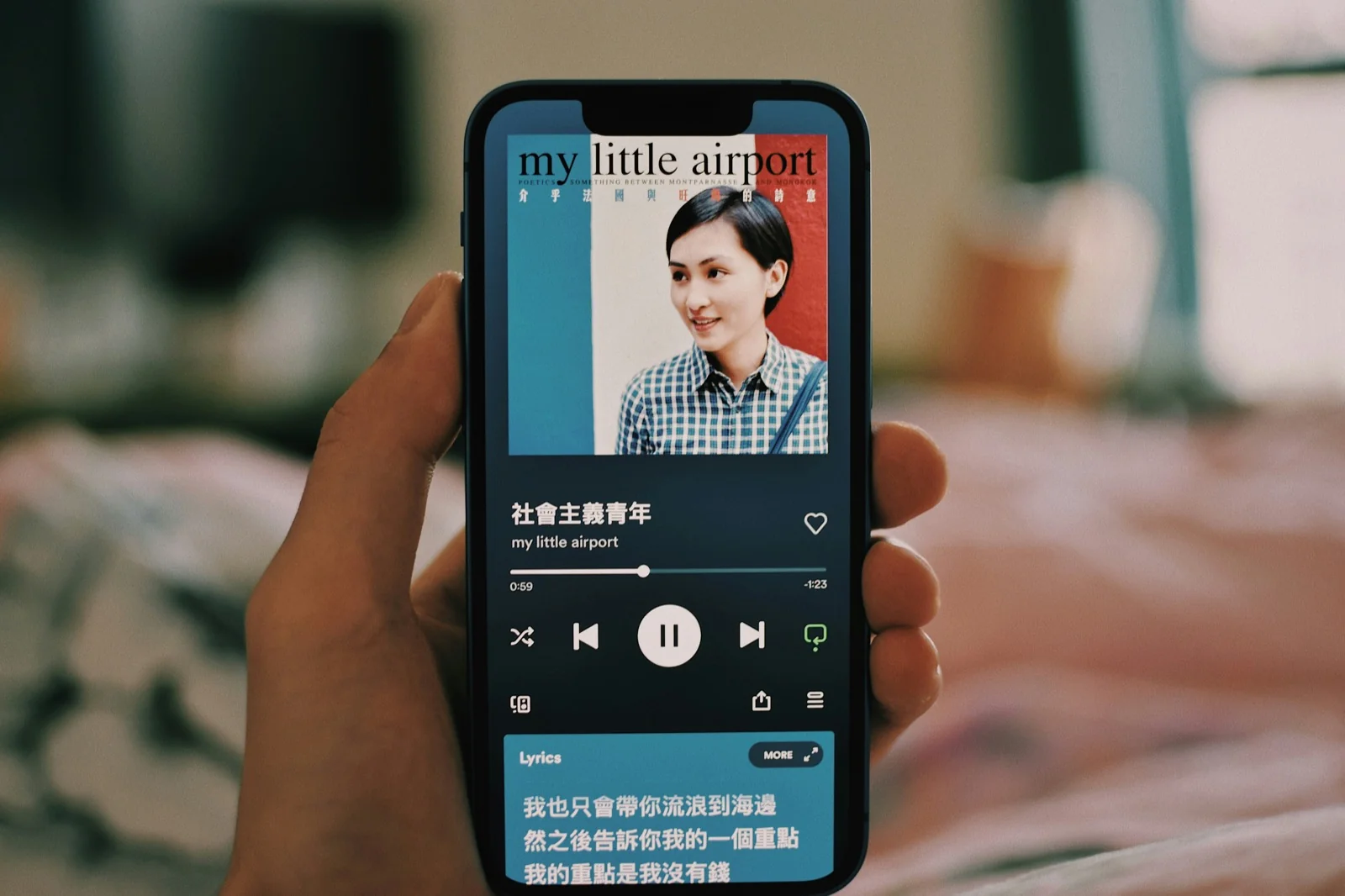
I recently tried study audio from a vocabulary set in Quizlet, and an Audio Overview in Gemini Notebook. In both cases, one English voice read the gloss and the Chinese phrases too. The Mandarin was still English text-to-speech on the Chinese lines: English consonants and vowels on every syllable, tones washed out or wrong, so 你好 (nǐ hǎo) and the rest came out butchered, not spoken Chinese. When you shadow those lines aloud, you practice copying that sound.
You finish flashcard review knowing the meanings on screen, but you still have not heard those words at natural speed or said them out loud. One-voice study audio makes that gap worse, not better.
Chapter vocab podcasts are what we built for that loop. Each episode covers the same chapter vocabulary as your deck, as a listen-and-shadow session for the commute or the dishes. For how listening fits with reading, writing, and speaking, see the Chinese study methods guide. For the shadowing technique itself, see How to Shadow Your Dragon. This post covers the in-app version tied to your deck.
Between flashcards and conversation
Most study time falls into one of two buckets. Recognition (flashcards, graded reading, dictionary lookups) builds your passive vocabulary. Production (Scenarios, homework sentences, pronunciation scoring) makes you speak.
Listening-only study is easy to log hours on, but those hours rarely touch the words in your SRS queue. Hidden Dragon podcasts are chapter-linked: each episode spotlights vocabulary from one deck chapter (Introduction to Chinese / Pre-HSK 1, an HSK Standard Course book, or a shared book you follow).
A practical loop:
- Review the chapter in SRS (why four schedules matter).
- Listen to the chapter podcast and shadow the Chinese lines.
- Speak in a grammar Scenarios lesson or a situational scenario at your level.
Free vs Pro: Podcasts for Introduction to Chinese (Pre-HSK 1), Lessons 1–12, are free for everyone, including saved audio. Listening to podcasts in other books, and generating new episodes, requires Pro. See pricing for details.
Free Pre-HSK intro episodes
The Introduction to Chinese deck matches Chinese Zero to Hero Pre-HSK 1 and has an episode for every lesson. Each script is built from that lesson's word list with a fixed structure: a welcome, each spotlight word, a recap, and a short lead-in to flashcards or games. The same lesson always produces the same episode.
We are an affiliate partner of Chinese Zero to Hero; we link their course because it matches the vocabulary in that book.
Open the deck at /decks/zh/introduction-to-chinese. Each chapter lists its lesson podcasts. Play from the chapter card, or browse /podcasts?book=introduction-to-chinese&lang=zh. Dragon Lesson's overview links there after you start a chapter.
Here is the free Lesson 1 episode. It covers 你, 好, 你好, 阿姨, 我, and 是:
Lessons with long word lists are split into Part 1 and Part 2.
A native voice for every Chinese line
Many tools work the same way: one voice for the whole script. You hear 你好 with an English accent, or pinyin read as if it were English. Quizlet's listen button is still fine for a quick hear-it-once pass. Our episodes target repeated shadowing, with a native Chinese voice on every Chinese line.
In Hidden Dragon episodes, every line is assigned to one of two voices:
- English teacher voice: meaning, grammar hints, and pronunciation coaching. English lines never contain Chinese characters; scripts that do are rejected before audio is made.
- Native Chinese voice: every character, example sentence, and minimal pair.
Both voices are combined into a single audio file that alternates between them, the same way Scenarios audio works.
Take 你好. Each syllable on its own is third tone (nǐ + hǎo), but in speech the first one rises: ní hǎo. The episode explains that rule in English, then the Chinese voice says the word so you can copy it.
What goes into an episode
Each episode is built from a set of checked facts about the chapter's spotlight words. Depending on the vocabulary, you may hear:
- Example sentences from your deck and from Tatoeba: the Chinese line first, then an English gloss. More examples live in Chinese sentences.
- Tones: third-tone sandhi and citation tones on spotlight words (tones guide).
- Consonants: initials English speakers mix up (zh vs j, sh vs x, aspiration on b/d/g), the same coaching as the pronunciation trainer.
- Confusables: near-miss characters and words (Confusables game).
- Writing tips: stroke-order cues, followed by the Chinese voice repeating the character.
- Character breakdowns: radicals, phonetic components, and etymology hints for single-character words.
Why not a one-prompt AI podcast?
Tools that turn a paste or a prompt into a "study podcast" demo well. In daily use they fall apart: examples that were not in your deck, wrong tones, Chinese lines read in an English voice, and no link to the chapter you reviewed yesterday.
We do not ship that product. Episodes are built from your chapter word list, checked facts, and two voices (English teacher plus native Chinese). That takes longer than a single prompt. You get something you can repeat on Monday's commute with Lesson 3's words still fresh.
Where AI-written lines appear (Pro, Advanced+)
Most episodes use no AI narration at all. Every free intro episode, and every episode below Advanced difficulty, is assembled only from fixed templates and the checked facts above.
At Advanced and higher (Pro), some Chinese lines can be LLM-written for variety and richer recap. Those lines still must pass the same checks: spotlight words from your chapter, facts we already validate elsewhere, and native Chinese voice only on Chinese text. We are not asking a chatbot to invent a standalone podcast about "learning Mandarin."
Level, mood, and generating your own (Pro)
On Pro, you can generate a podcast for a chapter that has no published episode yet, or change the level and mood and regenerate a personal copy.
- Difficulty sets how much English guides you versus Chinese-only recap. Baby Dragon and Beginner stay English-guided; higher levels shift toward Chinese.
- Mood (Informative, Creative, Fun, and others) changes the tone, speaking style where the voice supports it, and example length. It doesn't change the chapter vocabulary.
Generated episodes are saved; replay is free. Pro limits how many new episodes you can create each day.
HSK books and word lists
After a Zero to Hero HSK video, the matching Hidden Dragon book chapter has SRS, stories, Scenarios, and podcasts on the same vocabulary.
Our HSK books use HSK 3.0 level labels in the app. If you're comparing HSK 2.0, 3.0, and the newer 3.1 lists, use the HSK version comparison once, then study the list your course and exam use. With Pro, you can generate chapter podcasts from those HSK decks too.
A weekly loop
| Step | What | Where |
|---|
| Input | Video or textbook chapter | Z2H / your course |
| Drill | SRS (definition, tone, writing, speaking) | Dashboard deck |
| Listen | Shadow the chapter podcast | Deck chapter or /podcasts |
| Speak | Scenario or grammar lesson | Speak card on the dashboard |
Frequently asked questions
Are the Pre-HSK intro podcasts free?
Yes. Every Introduction to Chinese lesson episode is free to stream, no account needed.
Can I generate a podcast from my HSK deck?
Yes, with Pro. Open an HSK book chapter, choose Generate episode, pick a difficulty and mood, and listen from the chapter card or your library.
How is this different from shadowing stories?
Shadowing graded stories trains connected prose with karaoke read-along. Vocab podcasts train the same words as your flashcards, with tones, confusables, and examples, in a shorter episode shaped like a lesson.
Why do some apps read Chinese with an English voice?
Many study tools read Chinese phrases with an English text-to-speech voice. We give every Chinese line to a native Chinese voice.
Photo by Maccy on Unsplash.
Start Learning
Ready to practice what you have read?
Hidden Dragon brings these lessons to life with stories, flashcards, Dragon tutors, and spaced repetition. The free tier is permanent and generous, no credit card required. Your Dragon is waiting.
Start for free →